 Darkrai Lair
Darkrai is one of the most complex and compelling Pokémon ever created. Classified as a Mythical Pokémon of the Dark type, it embodies something rare in the franchise: a Pokémon whose nature is genuinely ambiguous. Is Darkrai a villain? A monster? Or a tragic figure, cursed by its own existence?
The answer, across every piece of Pokémon media, is the latter.
Origins and Classification
Darkrai is a Mythical Dark-type Pokémon introduced in Generation IV (Sinnoh region). It cannot be found through normal gameplay — it was originally distributed through special events, which gave it an air of mystery and rarity that reinforced its mythical status.
Key stats:
- Height: 1.5 m (4'11")
- Weight: 50.5 kg (111.3 lbs)
- Ability: Bad Dreams
- National Dex: #491
- Base Stat Total: 600 (tied with Cresselia as mythical counterparts)
Darkrai's 600 base stat total is distributed for offensive power — high Special Attack and Speed make it a sweeper in competitive formats. The design philosophy is evident even in the numbers: Darkrai is fast, strikes hard from a distance, and doesn't stick around.
The Bad Dreams Ability
Darkrai's signature ability — Bad Dreams — damages sleeping opponents at the end of each turn. This is not a passive choice. Darkrai causes nightmares simply by being near others. Sleeping Pokémon lose HP. Sleeping people suffer.
The Pokédex entries across games make this clear and unsettling:
"It can lull people to sleep and make them dream. It is active during nights of the new moon." — Diamond "A Pokémon that causes nightmares. If it gets close to a sleeping person, that person will have terrible nightmares it cannot escape." — Platinum
What the Pokédex doesn't say — but the lore strongly implies — is that Darkrai cannot turn this off. The nightmares aren't a choice. They're a consequence of what Darkrai is.
In competitive formats, Bad Dreams pairs with Sleep-inducing moves to create a passive damage loop. Darkrai learns Hypnosis naturally, creating a devastating combination: put opponents to sleep, then Bad Dreams chips away at them each turn.
Newmoon Island
Darkrai's home is Newmoon Island, a small, isolated location in Sinnoh accessible only via a special event item (the Member Card). The island is perpetually shrouded in fog. No wild Pokémon inhabit it. Only Darkrai waits there — isolated, alone.
This is important to the mythology. Darkrai has chosen (or been forced into) isolation precisely because of its ability. It cannot coexist with others without causing suffering. The island isn't a lair of a villain — it's the exile of a being who cannot safely live among the world.
The fog itself is significant. Newmoon Island exists in a state of perpetual twilight — neither day nor night, neither accessible nor fully sealed. It's a liminal space for a liminal being.
Darkrai and Cresselia: The Lunar Counterparts
Darkrai exists in deliberate contrast to Cresselia, a Lunar Pokémon who produces peaceful dreams and whose Lunar Wing is the only known cure for Darkrai-induced nightmares.
This pairing maps directly to mythological moon symbolism:
- Cresselia: the full moon, light, peace, healing
- Darkrai: the new moon (darkness), nightmares, isolation
The two Pokémon are designed as cosmological opposites — Cresselia on Fullmoon Island, Darkrai on Newmoon Island. In ancient mythologies across cultures, the new moon period was associated with spirits of the night, unseen forces, and liminal transitions. Darkrai fits this symbolism precisely.
Their in-game relationship suggests that somewhere in the Pokémon world's cosmology, Darkrai and Cresselia are meant to exist as a balanced pair — darkness and light, nightmare and dream. The tragedy of Darkrai is that one half of this balance is feared and isolated while the other is celebrated.
The Rise of Darkrai — The Movie
The 2007 film Pokémon: The Rise of Darkrai is the definitive statement on who Darkrai really is. Set in Alamos Town, the film follows Ash, Dawn, and Brock as they visit a city being torn apart by a conflict between Dialga (time) and Palkia (space).
Darkrai is initially portrayed as a menace — it confronts residents, causes nightmares, and seems to attack indiscriminately. The town fears it. Ash and friends are suspicious.
The reveal: Darkrai had been trying to protect Alamos Town. It was warning people away from the collision of Dialga and Palkia — and in the film's climax, it sacrifices itself to stop the battle, absorbing attacks from both legendary Pokémon until it's destroyed.
It survives, eventually — but the image of Darkrai standing alone against two of the most powerful beings in existence, sacrificing itself for a town that feared and hated it, is one of the most powerful moments in Pokémon film history.
→ Shop Rise of Darkrai movie merchandise on Amazon
Darkrai in Competitive TCG and VGC
Beyond the lore, Darkrai has been a competitive force across multiple formats:
TCG:
- Darkrai EX (Dark Explorers, 2012) — Defined the Black & White competitive era with Dark Cloak immunity
- Darkrai VSTAR (Astral Radiance, 2022) — Star Abyss ability is among the most powerful search effects in modern formats
- Darkrai & Umbreon GX (Unified Minds, 2019) — Tag Team pairing created a formidable attacker/support combo
VGC:
- Darkrai has been a Restricted or semi-Restricted Pokémon in various seasons, with Dark Void (its signature move) periodically modified in competitive rules
- Its Speed tier (125 base Speed) allows it to outpace most Pokémon in standard play
→ Shop Darkrai TCG cards on Amazon
Darkrai in Pokémon Mystery Dungeon
The Explorers of Sky special episodes give Darkrai a complete character arc that many fans consider the best storytelling in the main Pokémon game series. SPOILERS follow.
Darkrai was responsible for the events of Explorers of Time/Darkness/Sky — it wiped the player character's memory and set several plot events in motion. Throughout the main game, it functions as a seemingly pure antagonist.
The Special Episodes reveal: Darkrai saw a vision of the future in which the world was destroyed by a great darkness. Convinced it was the darkness, it chose to become a villain — wiping memories, manipulating events — to prevent a future it believed it would inevitably cause.
The tragedy: Darkrai was wrong. The darkness wasn't itself. But by the time it understood this, it had already done irreparable harm out of misguided self-sacrifice.
This narrative arc — a being that chose to be a villain to prevent a greater evil it only imagined — is extraordinary writing for any medium, let alone a handheld Pokémon game.
Why Fans Love Darkrai
Darkrai resonates because it's a metaphor. It's a creature that cannot exist without causing harm — not out of malice, but out of nature. It chose isolation over connection. And when the moment came to act, it chose sacrifice over survival.
That's a genuinely moving character arc for any medium, let alone a children's franchise about pocket monsters.
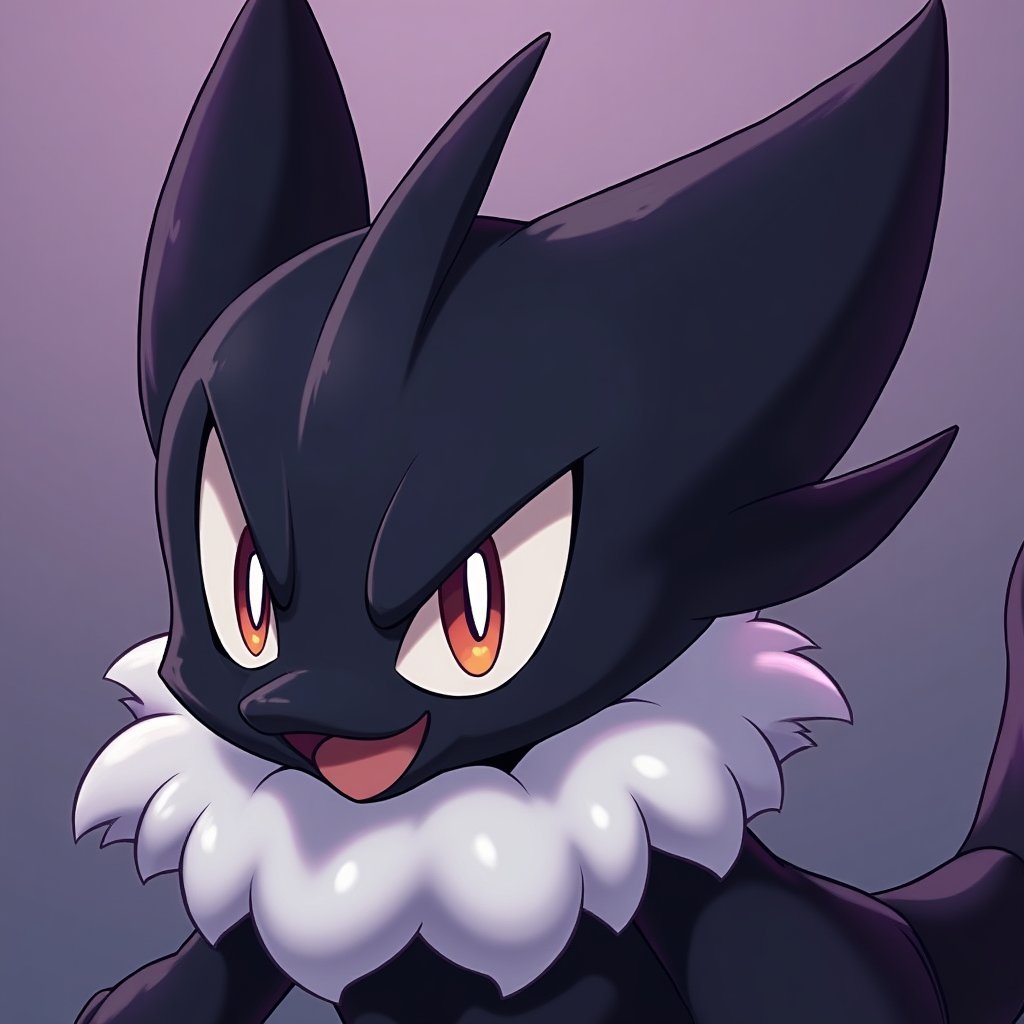
The dark, minimalist design reinforces the mythology. Darkrai looks like a shadow given form — that streak of white at its face the only light in the darkness. It's beautifully designed to express what it represents: something that lives in darkness and fears what it might do if it got too close to the light.
FAQ
Is Darkrai evil? No — and this is the entire point of its lore. Darkrai causes harm through its nature, not its intent. Every major piece of Pokémon media portrays Darkrai as ultimately protective, sacrificial, and tragic. It's the most misunderstood Pokémon in the franchise.
What is Darkrai based on? Darkrai draws from multiple traditions: Japanese concepts of nightmare demons (Baku in particular, though Darkrai inverts the Baku's nightmare-eating function), Western shadow mythology, and lunar mythology around the new moon. The white mask face also draws from Japanese theatrical tradition (Noh theater masks).
Can you catch Darkrai in modern games? Darkrai was distributed through special events in Generation IV. In later games, it has appeared through Mystery Gift distributions. Check official Pokémon news for current event availability.
Why does Darkrai live on Newmoon Island alone? Because its Bad Dreams ability harms anyone who sleeps near it. Its isolation is self-imposed — a form of protection for others that comes at the cost of its own companionship. This is a recurring theme across all Darkrai appearances.
What's the best piece of media for Darkrai lore? The Rise of Darkrai (2007 film) and the Pokémon Mystery Dungeon: Explorers of Sky Special Episodes together give the most complete picture. The film handles the sacrifice/protection theme; the game handles the guilt/redemption arc.
Darkrai Lair is an independent fan site — not affiliated with Nintendo or The Pokémon Company International.
As an Amazon Associate we earn from qualifying purchases. This article contains affiliate links; if you buy through them we may earn a small commission at no additional cost to you.