 Darkrai Lair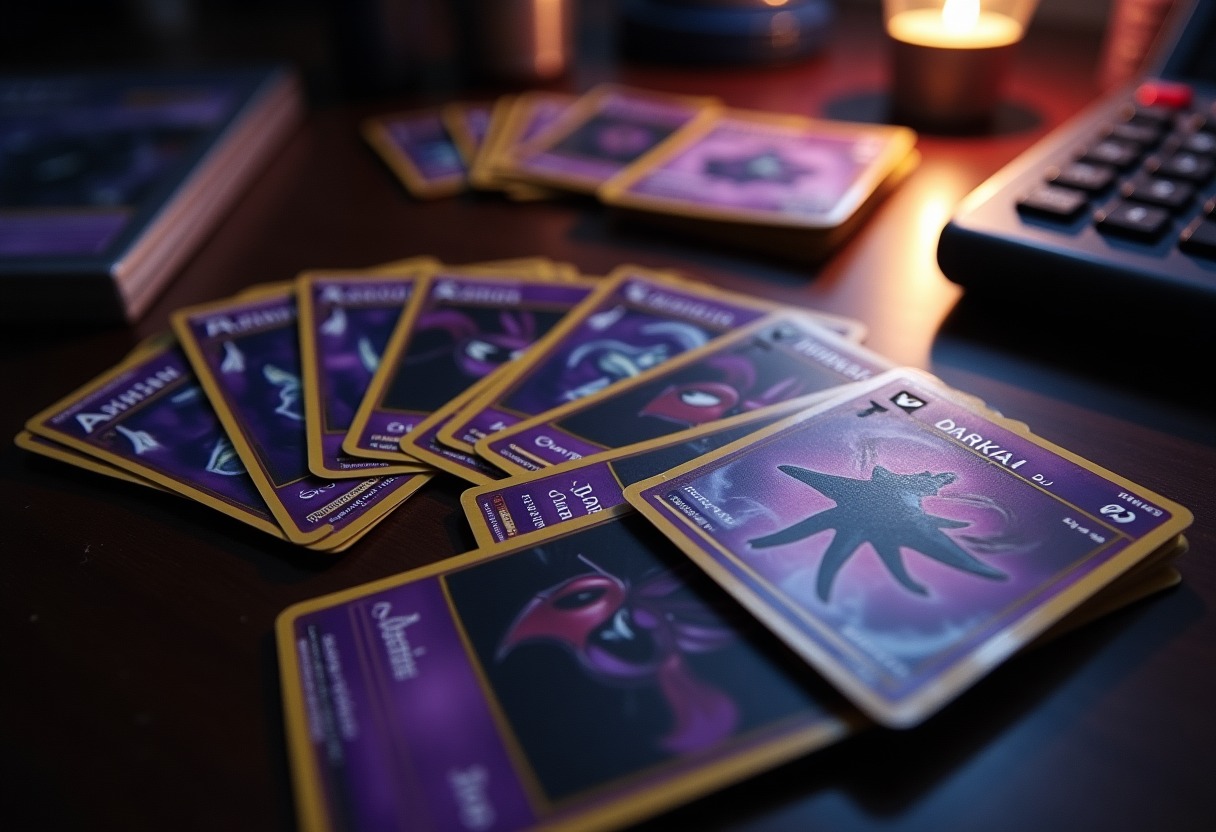
Building a competitive Darkrai deck shouldn't require selling your entire collection. The nightmare Pokémon's raw power and versatility make it perfectly suited for budget builds that can hold their ground at local tournaments, often for under $100 total investment.
Why Budget Darkrai Builds Dominate Local Metas
Darkrai's fundamental strength lies in its energy acceleration and consistent damage output — mechanics that don't require expensive chase cards to function effectively. The Pokémon Company International has designed recent Darkrai cards with built-in synergies that reward strategic deck construction over pure card rarity.
Budget Darkrai decks excel in local tournament environments because they exploit predictable meta patterns. Most casual players run inconsistent lists with expensive single-copy cards, while your streamlined Darkrai build maintains pressure every turn. The deck's core strategy — powering up multiple attackers while disrupting opponent setup — translates perfectly to budget constraints.
The key insight: expensive cards often provide marginal improvements over budget alternatives, but consistent deck construction wins more games than individual card power level.
Core Budget Darkrai Framework Under $60
Start with a 3-3 Darkrai line using the most cost-effective versions available. Darkrai V from Brilliant Stars typically runs $8-12 per copy, while older Darkrai-EX variants can be found for $3-5 each. Your energy base should prioritize consistency over speed — 12-14 basic Dark Energy costs virtually nothing but ensures you never miss energy drops.
The engine revolves around Professor's Research and Quick Ball for consistency, Battle VIP Pass for setup, and Twin Energy for acceleration. These staples rarely exceed $2-3 per card and form the backbone of every competitive list. Skip expensive draw supporters like Marnie in favor of consistent options.
Your attacker lineup should include budget-friendly Dark types that complement Darkrai's energy sharing. Umbreon VMAX from Evolving Skies often trades below $15 and provides a secondary win condition. Single-prize attackers like Sableye from Lost Origin add versatility for under $1 each.
Protect your investment with quality → Shop Pokemon card sleeves on Amazon and a sturdy → Shop deck protector box on Amazon to maintain card condition during tournament play.
Advanced Budget Build Strategies
| Component | Budget Option | Premium Alternative | Cost Difference | |-----------|---------------|-------------------|-----------------| | Main Attacker | Darkrai V ($10) | Darkrai VSTAR ($25) | $45 saved | | Secondary Attacker | Umbreon V ($8) | Shadow Force Necrozma ($20) | $36 saved | | Draw Engine | Professor's Research ($1) | Professor Burnet ($8) | $21 saved | | Energy Base | Basic Dark Energy ($0.25) | Twin Energy ($4) | $30 saved |
The most effective budget strategy involves maximizing four-of counts in key categories. Run four Professor's Research instead of splitting between expensive draw supporters. Include four Battle VIP Pass rather than mixing setup cards. This approach costs less upfront and provides superior consistency.
Consider regional meta when selecting tech cards. If your local tournaments favor evolution decks, budget disruption like Marnie's Pride costs under $2 but can swing matchups. Against aggressive single-prize decks, include Lost Vacuum for under $1 per copy to counter their tools.
Your → Shop Pokemon playmat on Amazon choice matters more than most realize — consistent play zones help avoid misplays that expensive cards can't fix.
Product Recommendations for Tournament Success
Essential accessories maximize your budget deck's competitive potential. Premium → Shop card binder portfolio on Amazon systems protect your growing collection while maintaining easy access for deck modifications between rounds.
Tournament-grade → Shop Pokemon damage counters on Amazon ensure precise game state tracking — critical when budget builds rely on perfect resource management. Glass bead counters or official dice sets provide reliability that cardboard substitutes can't match.
Consider deck boxes with dividers for sideboard storage. Many budget builds benefit from post-game modifications based on opponent strategies, and organized storage prevents costly mistakes during time-limited rounds.
Meta-Specific Budget Adjustments Most Players Miss
Local metas often develop predictable patterns that budget builders can exploit ruthlessly. Track your venue's most common archetypes over 3-4 weeks, then adjust your single-copy slots accordingly. This intelligence gathering costs nothing but provides massive competitive advantages.
Against control-heavy metas, replace expensive disruption with budget pressure cards. Radiant Alakazam from Pokemon GO costs under $3 but forces immediate responses from slow decks. In aggressive environments, prioritize cheap defensive options like Ordinary Rod over expensive recovery cards.
The 61st card principle applies especially to budget builds — identify the exact meta threats in your local scene and include laser-focused counters. A $0.50 Path to the Peak can neutralize $100+ Ability-based decks if your local group favors expensive engine Pokémon.
Our Darkrai Competitive Deck Build 2026 Meta provides additional insight into premium builds, but budget variants often perform within 10-15% of expensive versions in local tournament settings.
FAQ
How much should I expect to spend on a competitive budget Darkrai deck?
A tournament-viable budget Darkrai deck typically runs $75-95 when built strategically. The core Pokémon lineup accounts for roughly 60% of total cost, with trainer cards and energy making up the remainder. You can start with an even more basic $50 version and upgrade gradually as you win store credit or trade for improvements. Focus spending on consistency cards first — four copies of essential trainers matter more than expensive single-copy inclusions. Most successful budget builders recommend setting aside 10% of your initial investment for ongoing modifications based on local meta shifts.
Which Darkrai card offers the best value for budget tournament play?
Darkrai V from Brilliant Stars provides optimal price-to-performance ratio for budget builders. Its 220 HP survives most common attacks, while its Astral Radiance ability provides consistent energy acceleration without requiring expensive support cards. The card typically trades between $8-12, making it accessible for budget builders while maintaining competitive viability. Alternative options like older Darkrai-EX variants cost less but sacrifice HP and modern synergies. Avoid Darkrai VSTAR initially — while powerful, its $25+ price point represents poor budget allocation when building your first competitive list.
Can budget Darkrai decks actually win against expensive meta decks?
Budget Darkrai builds regularly place top 4 in local tournaments when piloted skillfully and built for specific metas. The deck's inherent consistency often outperforms expensive builds that rely on perfect draws or complex combos. Your advantage comes from predictable game plans and superior resource management — expensive decks often include situational cards that become dead draws. Focus on learning opponent patterns and mulligan decisions rather than envying premium cards. Many budget Darkrai pilots report 60-70% win rates at local level, with losses typically attributable to pilot error rather than card quality differences.
Should I proxy expensive cards for testing before buying budget alternatives?
Proxy testing reveals which expensive cards actually impact your win rate versus providing marginal improvements. Print high-quality proxies of premium options and play 20-30 games against your expected meta. Track specific situations where expensive cards would have changed outcomes versus budget alternatives. This data-driven approach prevents costly mistakes and identifies genuine upgrade priorities. Most players discover that expensive cards improve consistency by 5-10% rather than unlocking entirely new strategies. Use testing results to prioritize your upgrade path — some premium cards justify their cost while others provide luxury rather than necessity.
How do I modify my budget Darkrai deck between tournament rounds?
Effective sideboarding on a budget requires careful observation and quick decision-making between rounds. Identify your opponent's primary strategy during game one, then swap 2-3 single copies for targeted responses. Keep a small collection of budget tech cards (Path to the Peak, Lost Vacuum, basic counters) that cost under $2 each but counter specific archetypes. Write down common local deck types and your planned modifications beforehand to avoid time pressure mistakes. Many budget players maintain a 5-7 card sideboard focused on their venue's most popular strategies rather than trying to counter every possible deck. This focused approach costs less and provides more consistent results than broad preparation strategies.
Budget Darkrai builds prove that strategic deck construction trumps expensive cards in local tournament environments — your nightmare-fueled victories will be both satisfying and cost-effective.
Some links on this page are affiliate links. We may earn a small commission if you purchase through them, at no extra cost to you.
As an Amazon Associate we earn from qualifying purchases. This article contains affiliate links; if you buy through them we may earn a small commission at no additional cost to you.